

MIGUEL ÁNGEL DE QUEVEDO PARK
In 1930, engineer Miguel Ángel de Quevedo y Zubieta, renowned for his defense of Mexico's forest wealth and known as "The Apostle of the Tree", arrived in Veracruz and found in the Laguna de los Cocos ideal conditions for developing various seeds he had brought from other regions of the country. With the support of Chinese workers he himself hired, he began experiments in planting and plant conservation in the area.
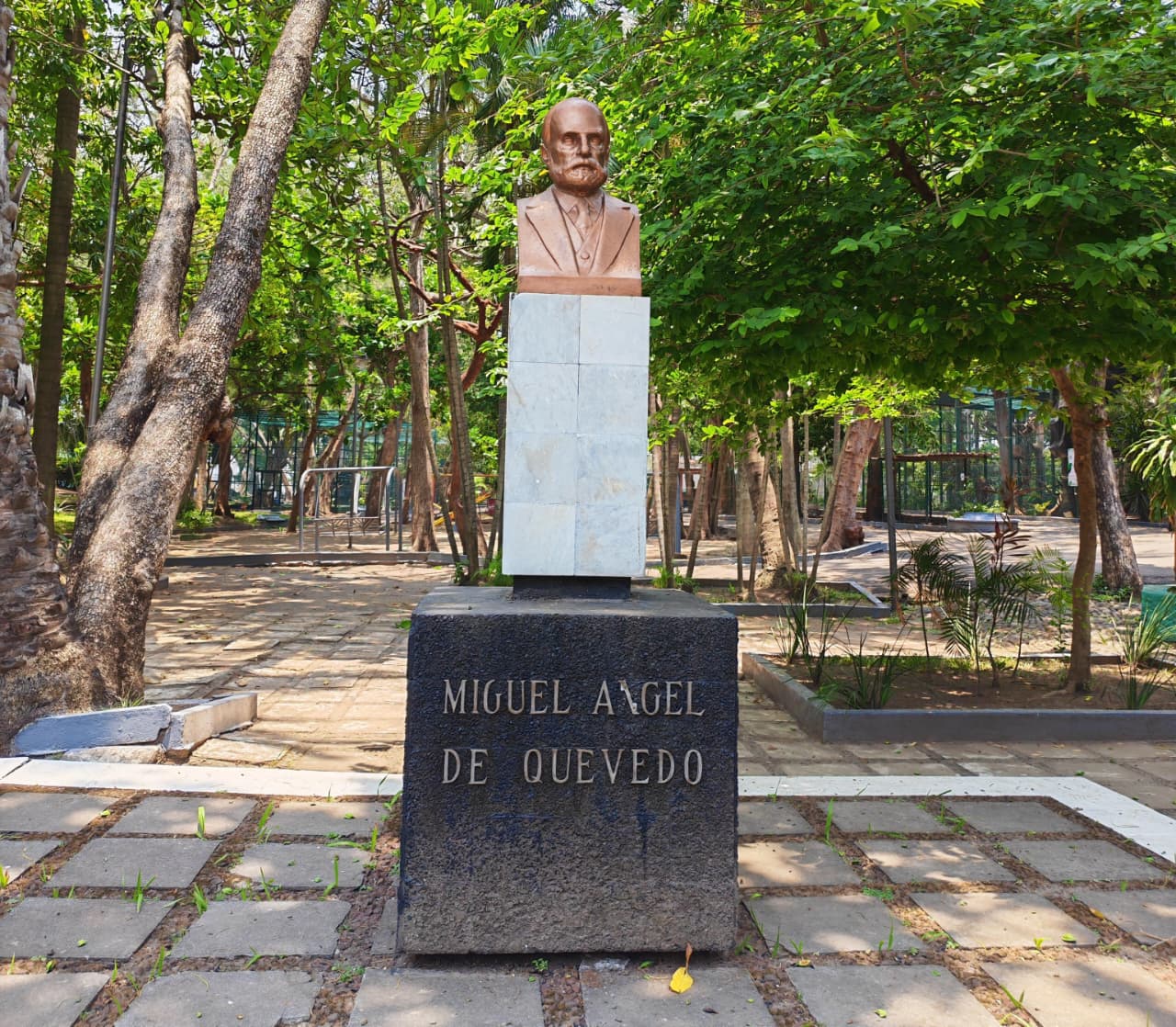
The "Miguel Ángel de Quevedo" Nursery Park was the first park in the city of Veracruz and the first in the state. It was inaugurated on March 29, 1966 by the then state governor, Fernando López Arias, and the municipal president Manlio Fabio Tapia Camacho.
In its early days, the park hosted a wide variety of flora, among which ficus, fine palms, cedars, limonarias, coconut palms, fruit trees, jacarandas, tulips and bougainvilleas stood out, in addition to some species of wildlife.
During the 1990s, the space was used as a warehouse for SARH (Secretariat of Agriculture and Hydraulic Resources), as well as for offices and parks and gardens areas, still retaining the name Miguel Ángel de Quevedo. Subsequently, on April 30, 1995, it was re-inaugurated by the then municipal president Roberto Bueno Campos, adopting the name "Miguel Ángel de Quevedo" Botanical Park.
Currently, the park has veterinarians in charge of the care and management of the different animal species that inhabit its facilities. In addition, the "Miguel Ángel de Quevedo" Regional Botanical Park represents a natural reserve with nearly 90 years of history, functioning as one of the most important green lungs of the city of Veracruz.
This natural reserve has an area of approximately 4.7 hectares and houses a lagoon belonging to the Interdunal Lagoon System of the metropolitan area of the municipalities of Veracruz and La Antigua.
Today, the park operates as a PIMVS (Property or Facility that Manages Wildlife), where various species of wildlife are protected and exhibited. Many of these animals are under the protection and custody of federal authorities, while others are part of the heritage of the Honorable City Council of Veracruz, either by having been born in these facilities or through donations made by individuals and institutions.